In a remote mining facility located in the high-altitude regions of South America, the challenge was not just generating power, but managing it. Traditional brick-and-mortar substations would have taken months to construct, requiring specialized labor and extensive on-site testing in an unforgiving environment. To bypass these logistical hurdles, the project engineers turned to a Reliable Containerized Substation Turnkey Substation Solution, a plug-and-play power hub that arrives fully integrated and tested.
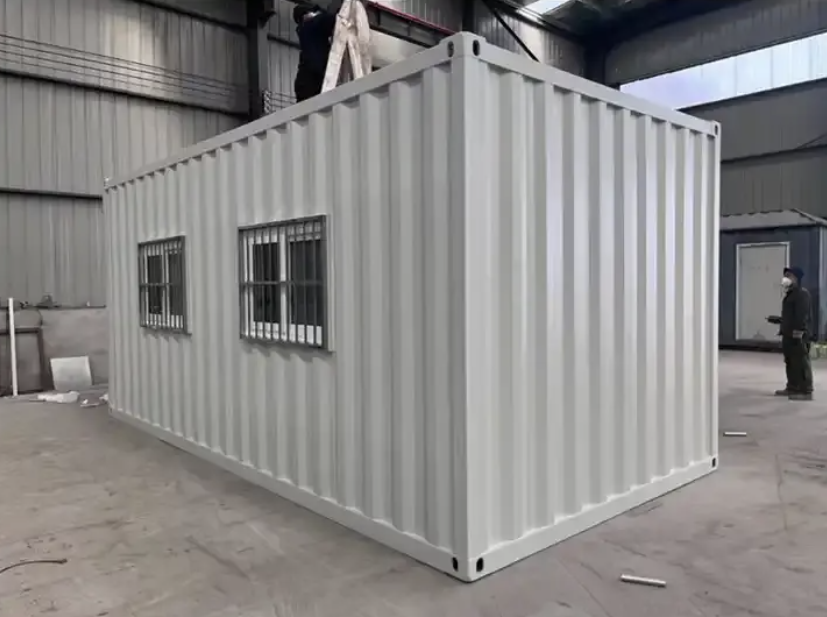
This containerized substation approach is transforming how industries—from renewable energy farms to urban hospitals—deploy electrical infrastructure. By housing transformers, switchgear, and control systems within a single, weather-resistant enclosure, these units offer a rapid, modular alternative to conventional builds, ensuring that critical operations stay powered regardless of geographical constraints.
Precision Engineering in the Modern Power Grid
The landscape of power distribution is moving away from massive, centralized structures toward localized, agile systems. This shift is driven by the need for more granular control within microgrids and the rise of decentralized industrial zones. In this context, the demand for a containerized substation is no longer just about convenience; it is about precision. Modern industrial sites, particularly in sectors like metallurgy and shipbuilding, require equipment that can handle fluctuating loads without the physical footprint of a traditional station.
As power requirements become more specific, the industry has seen a move toward “compactness” as a core engineering philosophy. Engineers are now focusing on the thermal management of oil-immersed and dry-type transformers within confined spaces. The integration of high-voltage switchgear and low-voltage cabinets into a unified steel housing requires sophisticated process equipment to prevent electromagnetic interference and ensure operational stability. This focus on the micro-level—individual component placement and internal ventilation—defines the current state of power transmission technology.
The Significance of UL Standards in Electrical Safety
In the North American and international markets, safety is not a suggestion; it is a rigorous technical requirement. The transition toward stricter safety protocols has highlighted the importance of UL (Underwriters Laboratories) certification. For any power equipment, specifically a containerized substation, adhering to UL safety codes means the unit has undergone exhaustive testing for fire safety, electrical insulation, and structural integrity.
Obtaining UL certification is a complex process that demands a high-quality “technical force.” It requires a manufacturing enterprise to verify every component—from the circuit breaker on column to the primary and secondary integration systems—against stringent safety benchmarks. For a developer or a utility provider, utilizing UL-compliant equipment is a strategic move to mitigate risk, reduce insurance premiums, and ensure long-term reliability. It marks the difference between a generic piece of machinery and a validated engineering solution that can be seamlessly integrated into a national grid or a high-rise building’s power system.
Advanced Technical Features of CHSH Containerized Substations
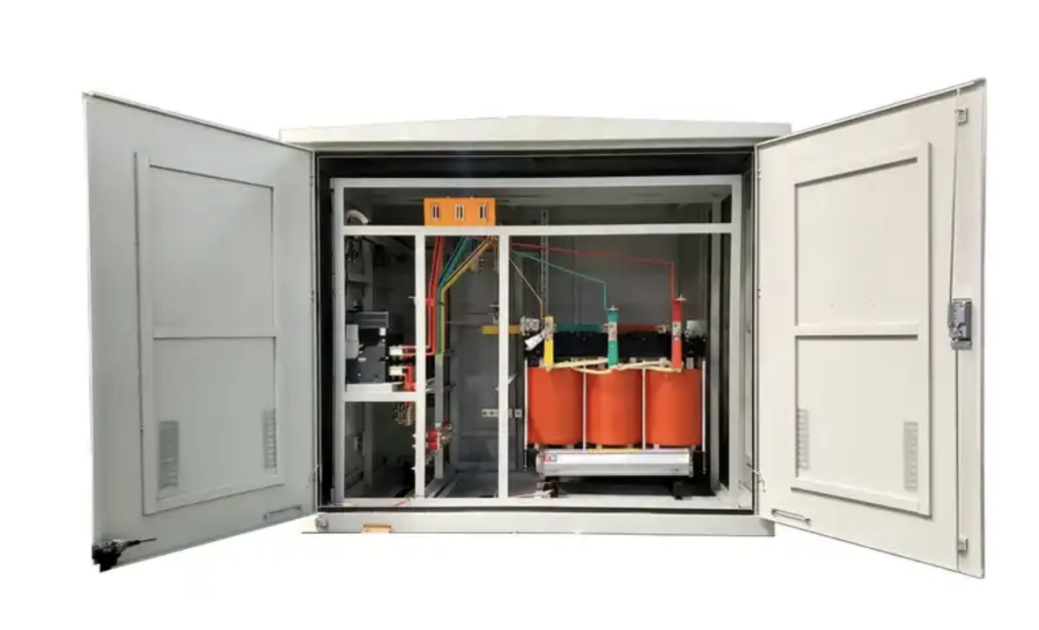
Based in Yueqing City, Zhejiang Province—widely recognized as the capital of China’s electrical appliances—Shenheng Power Equipment Co., Ltd. (CHSH) has refined the technical architecture of the containerized substation since its establishment in 2001. The company’s YB series of compact outdoor electrical substations serves as a prime example of this evolution. These units are designed to house 10kV to 35kV amorphous, oil-immersed, or dry transformers, depending on the specific environmental needs of the client.
A key technical advantage of these systems is the “primary and secondary integration” into the ring cage. This means the power distribution components (primary) and the monitoring/control systems (secondary) are factory-configured to work in perfect harmony. The enclosures are often prefabricated in either “American-type” or “European-type” configurations, allowing for flexibility in how the transformer is accessed and ventilated. This modularity ensures that a containerized substation can be deployed in diverse settings, from the humid conditions of a shipyard to the dusty environments of a mining site, without compromising the lifespan of the internal high-voltage switch-gear.
Delivering a Comprehensive Turnkey Substation Solution
While hardware is the foundation, the true value for many international partners lies in the turnkey substation solution. This service model simplifies the procurement process by providing a single point of accountability. Instead of sourcing cabinets, breakers, and transformers from multiple vendors, a turnkey provider manages the entire lifecycle: design, fabrication, internal wiring, and final testing.
CHSH has utilized this model to support complex infrastructure projects. For instance, in a recent collaboration for a large-scale photovoltaic (PV) farm in Southeast Asia, the requirement was for a kiosk-style, three-phase power distribution compact transformer substation. By providing a turnkey substation solution, the project benefited from pre-integrated JP cabinets and low-voltage switch-gear that were already optimized for solar power conversion. This reduced on-site commissioning time by nearly 40%. Another successful application involved a university campus expansion where the primary concern was aesthetics and space. The team delivered a compact, integrated circuit breaker on column system that fit within a minimal footprint while meeting all local electrical codes.
Technical R&D and Quality Control Standards
The reliability of a containerized substation is a direct result of the testing means employed during production. At the CHSH facility, every unit undergoes rigorous checks before it is cleared for export. This includes insulation resistance testing, temperature rise tests, and mechanical operation trials for the switch-gear. This commitment to quality is what supports the company’s ability to meet UL safety codes and maintain a strong presence in the global market.
The internal “technical R&D team” at CHSH focuses on improving the efficiency of 11kV and 33kV systems. By using sophisticated process equipment, they have been able to reduce the no-load losses in their amorphous transformers, which is a critical factor for clients focusing on green energy and operational cost reduction. This level of technical detail ensures that the containerized substation remains a viable, long-term asset rather than a temporary fix.
Future Outlook and Sustainable Infrastructure
Looking ahead, the role of the containerized substation will only grow as the world integrates more renewable energy and “intelligent buildings” into the grid. The future of the industry lies in the “smart” integration of these units—utilizing IoT sensors to monitor transformer health and load distribution in real-time. As a professional production enterprise, CHSH continues to explore these digital frontiers, ensuring that their turnkey substation solution remains at the cutting edge of the power transmission and distribution sector.
The focus remains on providing high-quality complete sets of devices that are not only powerful but also safe and easy to maintain. By combining over two decades of manufacturing experience with a forward-looking approach to global safety standards, the enterprise is well-positioned to power the next generation of industrial and urban infrastructure.
For more information on these power solutions, visit the official website: www.shenhengpower.com
Post time: Mar-07-2026